Pickleball
Kitchen faults, third-shot drops and dink rallies, counted for you.
1 camera per courtBehind the baseline4 m high
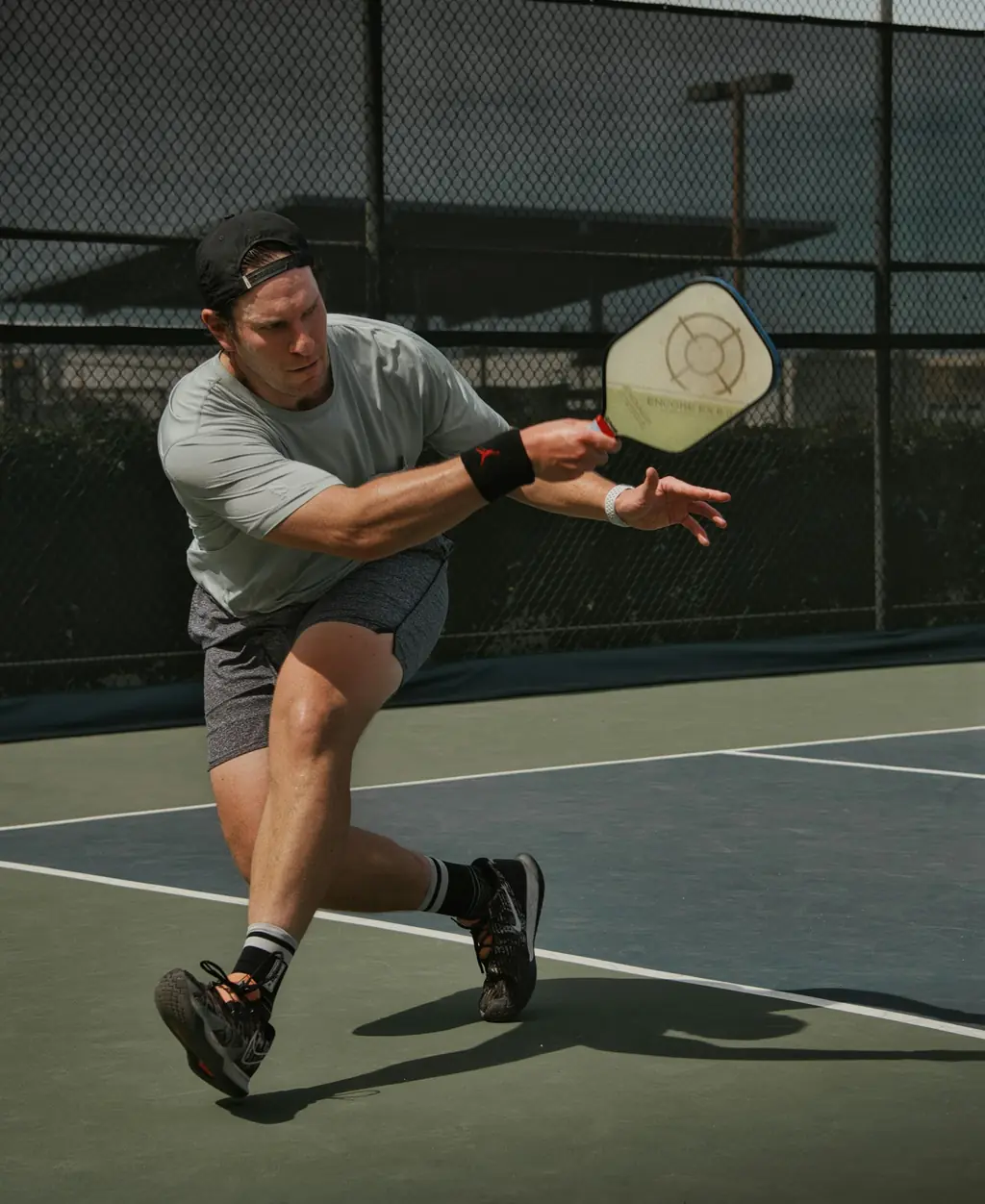
Pickleball is won at the kitchen line. The camera watches both feet and the ball on every volley.
Kitchen faultsVolleys hit from inside the non-volley zone, with the frame that proves it.
Third-shot dropsWhere each one landed, and how often it got your team to the net.
Dink ralliesLength, width and who broke the pattern first.
Serve and return depthMeasured from the baseline, shot by shot.
Speed-ups and resetsWho sped the ball up, and who calmly reset it.
PositionsWhere each player stood after every shot, stacking included.
One camera, set behind the baseline.
- Cameras
- 1 per court
- Position
- Behind the baseline, centred
- Height
- 4 m
- Court
- 13.41 × 6.10 m · 44 × 20 ft
412shots in a doubles match
4 of 37kitchen volleys were faults
68%third-shot drops landed in the kitchen
23shots in the longest dink rally
Sample numbers from one match.
Rules it knows
Non-volley zone faultsTwo-bounce ruleDiagonal serveIn or out, by the lineFoot faults on serve
Questions about pickleball
- How many cameras does a pickleball court need?
- One. It sits behind the baseline, centred, about 4 metres up.
- What does Sportseye measure in pickleball?
- Kitchen faults, third-shot drops, dink rallies, serve and return depth, speed-ups and resets, and where each player stood.
- Can the camera spot kitchen faults?
- Yes. It watches both feet and the ball on every volley, and shows volleys hit from inside the non-volley zone with the frame that proves it.
- Which pickleball rules does Sportseye know?
- Non-volley zone faults, the two-bounce rule, the diagonal serve, in or out by the line, and foot faults on the serve.